Every breakthrough and progress
It is our continuous pursuit of technological innovation

Every breakthrough and progress
It is our continuous pursuit of technological innovation
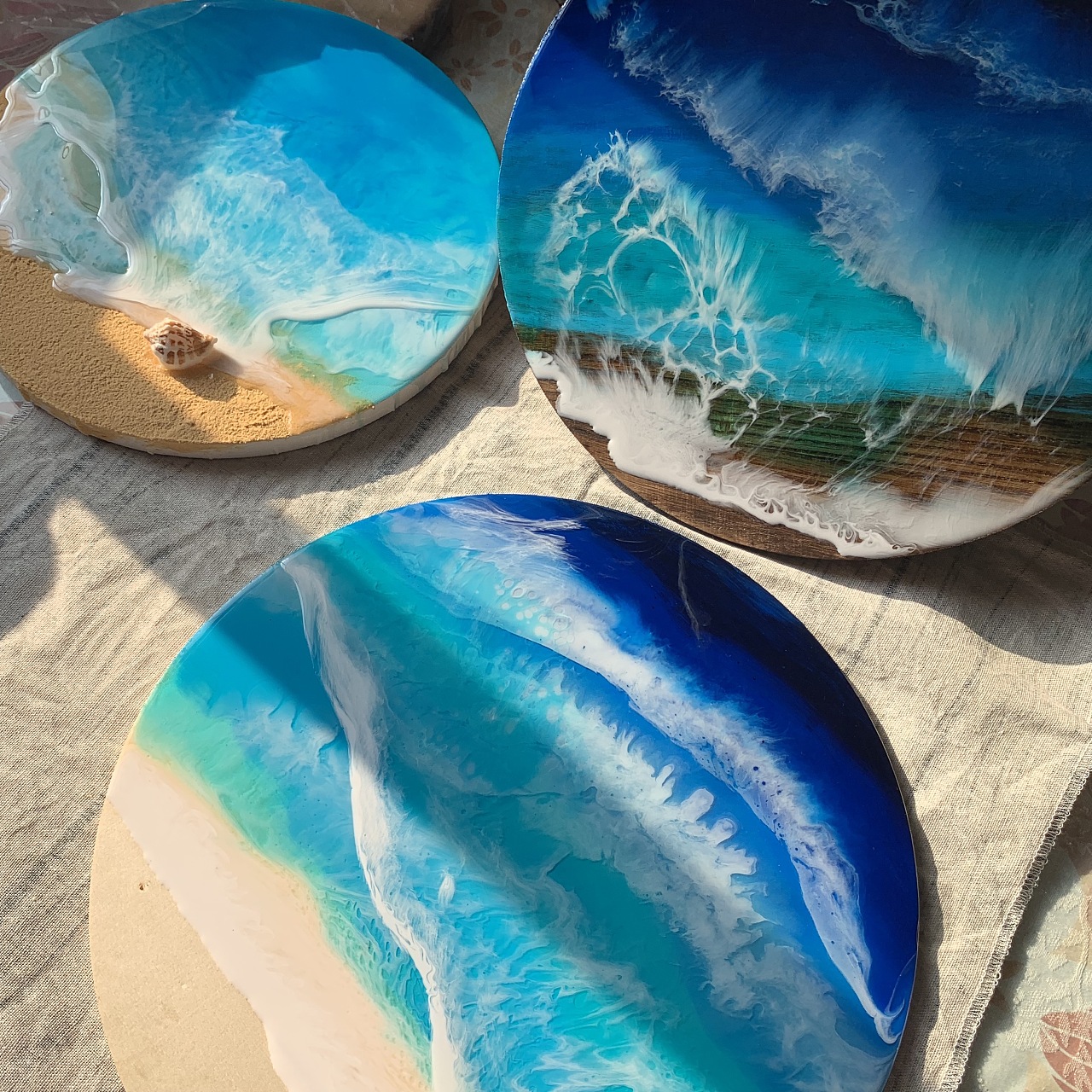
In modern commercial spaces and high-end residences, flooring is no longer merely a surface to walk on—it has become an essential part of spatial design. From the retro industrial style of cafes, the mirror-like finish of exhibition halls, to the marble texture of hotel lobbies—these floors that combine artistic beauty with practical functionality are typical examples of epoxy artistic flooring.
As a professional manufacturer of epoxy curing agents, Highfar provides critical performance support for the artistic flooring sector. This article explores the characteristics, application scenarios, and the key role of curing agents in epoxy artistic flooring.
Epoxy artistic flooring is a floor system based on epoxy resin systems that creates rich textures, colors, and tactile effects through various application techniques and material combinations. Unlike traditional flooring that pursues uniform flatness, artistic flooring emphasizes visual expressiveness and spatial atmosphere creation.
Common types of epoxy artistic flooring include:
Epoxy colored sand flooring: Combines colored quartz sand with epoxy resin, presenting a natural granular texture that is wear-resistant and slip-resistant
Epoxy terrazzo flooring: Uses epoxy resin as a binder, embedded with aggregates such as glass, shells, and stone, then polished to achieve a high-end decorative effect
Epoxy textured flooring: Forms orange-peel texture through special roller application, combining slip resistance with artistic appeal
3D epoxy flooring: Uses a thick transparent epoxy coating process to create three-dimensional visual effects over underlying patterns
Metallic epoxy flooring: Adds metallic pigments or pearlescent powders to present flowing metallic luster or dreamy colors
Compared to cement-based, PVC, and other flooring materials, epoxy artistic flooring offers irreplaceable comprehensive advantages.
In terms of decoration, the epoxy system offers rich colors, customizable textures, and options for high gloss or matte finishes. In terms of mechanical properties, it features high compressive strength, excellent impact resistance, and outstanding wear resistance. In terms of chemical resistance, it can withstand corrosion from acids, alkalis, salts, and oils. In terms of construction adaptability, it can be self-leveling, thick-coated, or manually shaped. In terms of maintenance, it is seamless, dustproof, and easy to clean, significantly reducing long-term maintenance costs.
The realization of these properties depends critically on the matching of epoxy resin and curing agent. The choice of curing agent directly affects the coating's hardness, flexibility, gloss, yellowing resistance, and application window.
Artistic flooring places more demanding requirements on curing agents than ordinary flooring.
Transparency and color stability are crucial. For scenarios such as colored sand flooring or clear topcoats that need to showcase the natural color of aggregates or underlying patterns, the curing agent must have a colorless and transparent appearance and good color stability to ensure the artistic flooring maintains its original design intent over time.
Leveling and gloss are equally critical. Artistic flooring demands extremely high smoothness and gloss on the topcoat. Low-viscosity curing agents mix thoroughly with epoxy resin to create an excellent self-leveling effect, resulting in a mirror-smooth surface.
Flexibility directly affects durability. Artistic flooring is often applied in places with minor thermal expansion, contraction, or vibration, such as shopping malls and underground garages. The curing agent system needs to provide good elastic balance to avoid coating cracking.
Application window control is also important. Artistic flooring often requires hand shaping or aggregate embedding, which demands specific working times. Different curing systems offer different gel times, allowing designers to choose flexibly based on process requirements.
The application boundaries of epoxy artistic flooring are continuously expanding.
In commercial spaces, brand flagship stores, exhibition halls, and cafes can enhance brand identity through metallic effects or 3D finishes, creating unique consumer experiences.
In high-end residences, villa garages, basements, and living rooms with epoxy artistic flooring achieve seamless, easy-to-clean, customizable surfaces, improving living quality.
In public buildings, museums, schools, and hospitals have high requirements for antimicrobial properties, slip resistance, and soft colors—epoxy artistic flooring meets both functional and aesthetic needs.
In industrial aesthetic spaces, creative parks and shared offices need to inject design elements while maintaining wear resistance, making epoxy artistic flooring an ideal choice.
Epoxy artistic flooring is redefining the possibilities of flooring—it is no longer a functional accessory but an active expression of spatial design. Behind all this aesthetics lies continuous innovation in epoxy curing agent technology.
Highfar remains dedicated to the research, development, and manufacturing of amine-based epoxy curing agents, providing reliable core material support for artistic flooring, industrial anti-corrosion, composites, and other fields.
Let the landscape beneath your feet stand the test of time
Highfar National Service Hotline


